IndyCar Delays New Chassis to 2028: $25–30M Overhaul Costs Drive Postponement Amid Rising Budgets
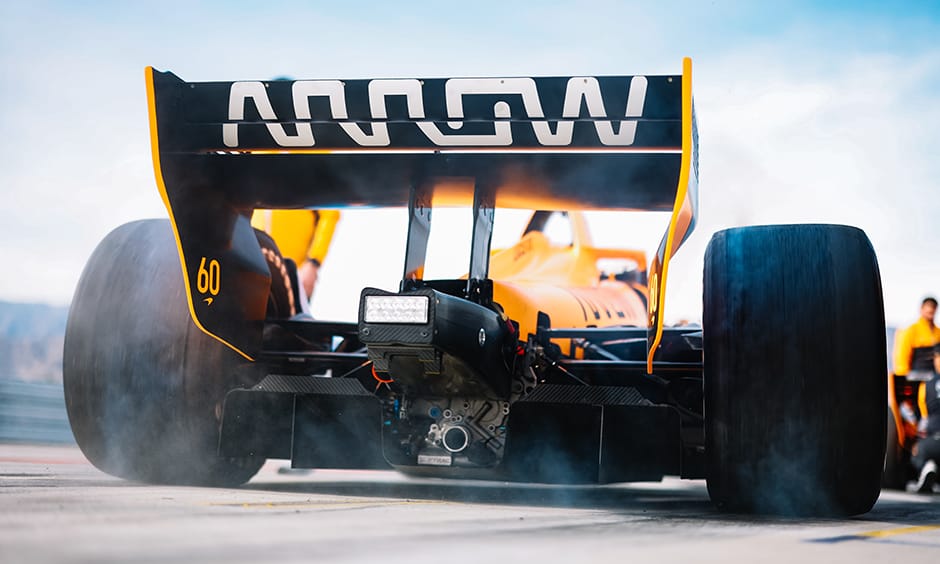
IndyCar has pushed back the debut of its next-generation chassis and engine package from 2027 to 2028, attributing the shift to incomplete regulations for the internal combustion engine and energy recovery system.
This one-year postponement allows additional development time, ensuring a more reliable rollout while addressing economic pressures on teams and manufacturers.
The current Dallara DW12 chassis, in use since 2012, will now extend its service life to at least 16 years, providing continuity but highlighting the series' cautious approach to major changes.
"IndyCar Series shifts new chassis and engine introduction from 2027 to 2028." (RACER, June 12, 2025)
Engine suppliers Chevrolet and Honda need at least 18 months to design, test, and produce over 50 motors each once specs are finalized.
Without locked-in rules, a 2027 launch risked incomplete preparation and potential reliability issues.
IndyCar officials, led by Penske Entertainment, prioritized a polished product over haste after consultations with stakeholders.
The delay creates a 2027 gap year, requiring extensions of current 2.2-liter V6 engine leases through that season.
An engine development freeze is expected for 2026 to redirect resources.
Honda's future beyond 2026 remains uncertain, with rumors of a NASCAR pivot, potentially leaving Chevrolet as the sole supplier.
Discussions with other OEMs like Nissan, Porsche, and Toyota are ongoing, but no commitments have materialized.
This manufacturer dynamic adds complexity, as a single-supplier scenario could impact competitive balance.
On-track testing for the new Dallara chassis begins in early 2026, focusing on aerodynamics, an 85-100 pound weight reduction, and hybrid integration.
Lighter components from Xtrac (transmission) and PFC (brakes) will enhance efficiency across ovals, roads, and streets.
The chassis will incorporate advanced safety features, building on the DW12's legacy.
Why Delay Now? Unpacking the Economic Drivers
The postponement responds to broader financial strains, with series owner Roger Penske citing the current economy as a barrier to major overhauls.
A full chassis transition would impose $25-30 million in collective costs on teams, covering acquisitions, adaptations, and spares.
This figure, from Penske's estimates, underscores the need for extended planning to avoid overburdening operations.
"Roger Penske rules out evolutionary chassis design until at least 2028 due to today's economy." (Sportskeeda, June 19, 2025)
Team budgets have surged, averaging $6-8 million per entry in 2025, with some reaching $10 million.
This reflects a 20-25% increase in 2024, driven by hybrid system expenses and inflation.
Mid-tier teams, without deep manufacturer backing, face the greatest challenges in absorbing these hikes.
"Average IndyCar team budgets range from $6-8 million per car in 2025, with some up to $10 million." (RACER, February 25, 2025)
High-end squads exceed $14-15 million annually, including driver pay and logistics for 18 races.
The Leaders Circle program boosted subsidies by $100,000 per slot in 2025, adding $2.2 million total for 22 entries—a partial offset.
Penske Entertainment is exploring financing plans to ease chassis acquisition, potentially through leasing or subsidies.
This delay enables cost-sharing, like joint testing, to mitigate burdens via economies of scale.
Sponsors appreciate the stability, as consistent specs support uninterrupted branding.
Budget Escalations and Series-Wide Implications
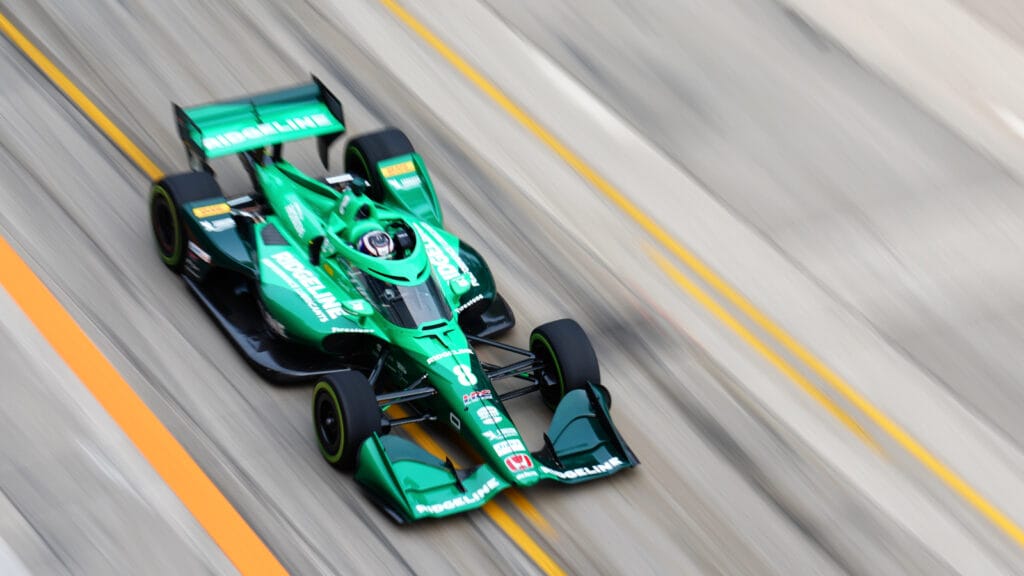
Operational costs continue climbing, with hybrid integration adding complexity and expense layers.
Teams report "ridiculous" budget levels, prompting calls for containment measures akin to Formula 1's caps.
The postponement aligns with this, avoiding immediate capital demands amid supply chain volatility.
"Team budgets increased 20-25% in 2024 due to hybrid system costs." (Hagerty, February 27, 2025)
For three-car teams, new tubs alone could push costs over $10 million, per series estimates.
This financial backdrop risks grid contraction if unaffordable, though the delay provides breathing room.
Promoters and broadcasters gain time to market the 2028 launch, potentially lifting viewership through hype.
Comparatively, F1's regulated spending has stabilized teams, a model IndyCar might adapt.
The move ensures accessibility for independents alongside OEM-backed entries.
Overall, it fosters sustainable innovation, balancing progress with fiscal prudence.
So What?
IndyCar's chassis delay to 2028, amid 18-month engine timelines, $25-30 million overhaul costs, and budget surges of 20-25% to $6-10 million per entry, offers stakeholders—teams, manufacturers, promoters, and sponsors—evidence-based tools for optimization: analytics can break down per-entry expenses to forge supplier alliances and efficiency models that curb inflation; trend identification from subsidy boosts like the $2.2 million Leaders Circle addition supports capital forecasting and investor outreach; event improvements could incorporate 2026 testing data to refine race formats, enhancing attendance and digital ROI; engagement strategies leverage DW12 stability for reliable sponsor activations, while advocating development freezes to maintain parity—these applications transform the postponement into advantages for cost management and competitiveness. Subscribe to Vantage Motorsports Event Analytics' free newsletter for more evidence-based insights.
#ProveYourVantage
Sources
- IndyCar shifts new car to 2028, RACER, June 12, 2025, https://racer.com/2025/06/12/indycar-shifts-new-car-to-2028
- When Roger Penske ruled out a new IndyCar amid rising costs, Sportskeeda, June 19, 2025, https://www.sportskeeda.com/nascar/news-i-don-t-see-happening-today-s-economy-when-roger-penske-ruled-new-indycar-amid-rising-costs
- Why do IndyCar team budgets keep climbing?, RACER, February 25, 2025, https://racer.com/2025/02/25/why-do-indycar-team-budgets-keep-climbing
- Report: IndyCar Team Owners Say Budgets Have Become Ridiculous, Hagerty, February 27, 2025, https://www.hagerty.com/media/motorsports/report-indycar-team-owners-say-budgets-have-become-ridiculous/
- Penske considering financing plan for new IndyCar chassis, RACER, April 10, 2025, https://racer.com/2025/04/10/penske-considering-financing-plan-for-new-indycar-chassis

Vantage. Motorsports Event Analytics levels the track for high-potential U.S. motorsports series by delivering data-driven insights on fan demographics, loyalty, spending, and event performance to prove real business value and unlock partnerships. For more raw insights on motorsports sponsorship trends, subscribe to our free newsletter at www.vantagepointmea.com. Unlock the data that drives wins.