Tyler Reddick Opens 2026 NASCAR Season With Historic Three-Race Sweep
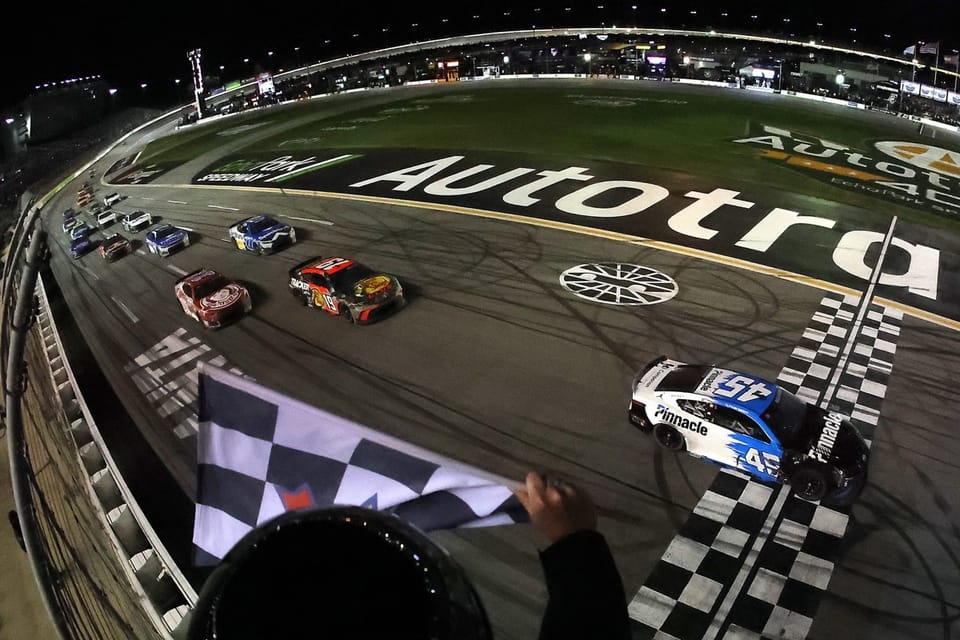
Tyler Reddick's victory at the Circuit of the Americas on March 1, 2026, marked an unprecedented achievement in NASCAR history, one that sharp-eyed investors are eyeing as a signal for surging team valuations amid a competitive field.
This win completed the first-ever three-race sweep to open a Cup Series season, a feat that's got CMOs recalculating sponsorship spends for maximum exposure in this high-octane start.
Reddick, driving for 23XI Racing, outpaced Shane van Gisbergen in the final laps after starting from pole position, showcasing how pole-to-win conversions can reliably pad the bottom line through consistent performance bonuses.
The accomplishment not only elevates Reddick's profile but also highlights data-driven performance edges in a parity-focused era, where teams that master analytics often lock in those elusive multi-year deals with top-tier brands.
What Drives Unprecedented Winning Streaks in NASCAR?
Historical precedents show that winning the first two races of a season is rare, achieved by only five drivers before Reddick, with the last being Matt Kenseth in 2009, a reminder for strategists that early momentum can set the tone for negotiating better broadcast slots.
Extending to three wins had never occurred in the series' 78-year history until 2026, pushing executives to question if over-relying on star drivers risks burnout that could derail long-term campaigns.
"Tyler Reddick became the first driver in NASCAR Cup Series history to win the first three races of the season."
(NASCAR.com, March 1, 2026)
This feat underscores the role of advanced telemetry and team strategy, where real-time data on tire wear, fuel efficiency, and aerodynamics provide marginal gains, giving savvy teams the ammo to justify hefty R&D budgets that pay off in podium finishes.
For 23XI Racing, co-owned by Michael Jordan and Denny Hamlin, this streak represents the first organizational three-win start since Petty Enterprises in 1963, a benchmark that's got sponsors lining up for extensions before the hype cools.
"23XI Racing became the first organization to win the first three races of a season since 1963."
(NASCAR.com, March 1, 2026)
Such milestones correlate with heightened team valuation and sponsor visibility, as consistent victories amplify brand exposure across broadcasts and social platforms.
Reddick's achievements have also sparked discussions on parity in NASCAR, where the Next Gen car aims to level the field, yet data shows top teams like 23XI leveraging analytics for consistent edges, prompting smaller outfits to scout mergers for tech access or face fading relevance.
This dynamic encourages investment in data tools, as evidenced by rising telemetry market values in motorsports, a trend that's smart for boards to ride before costs spike from supply chain pinches.
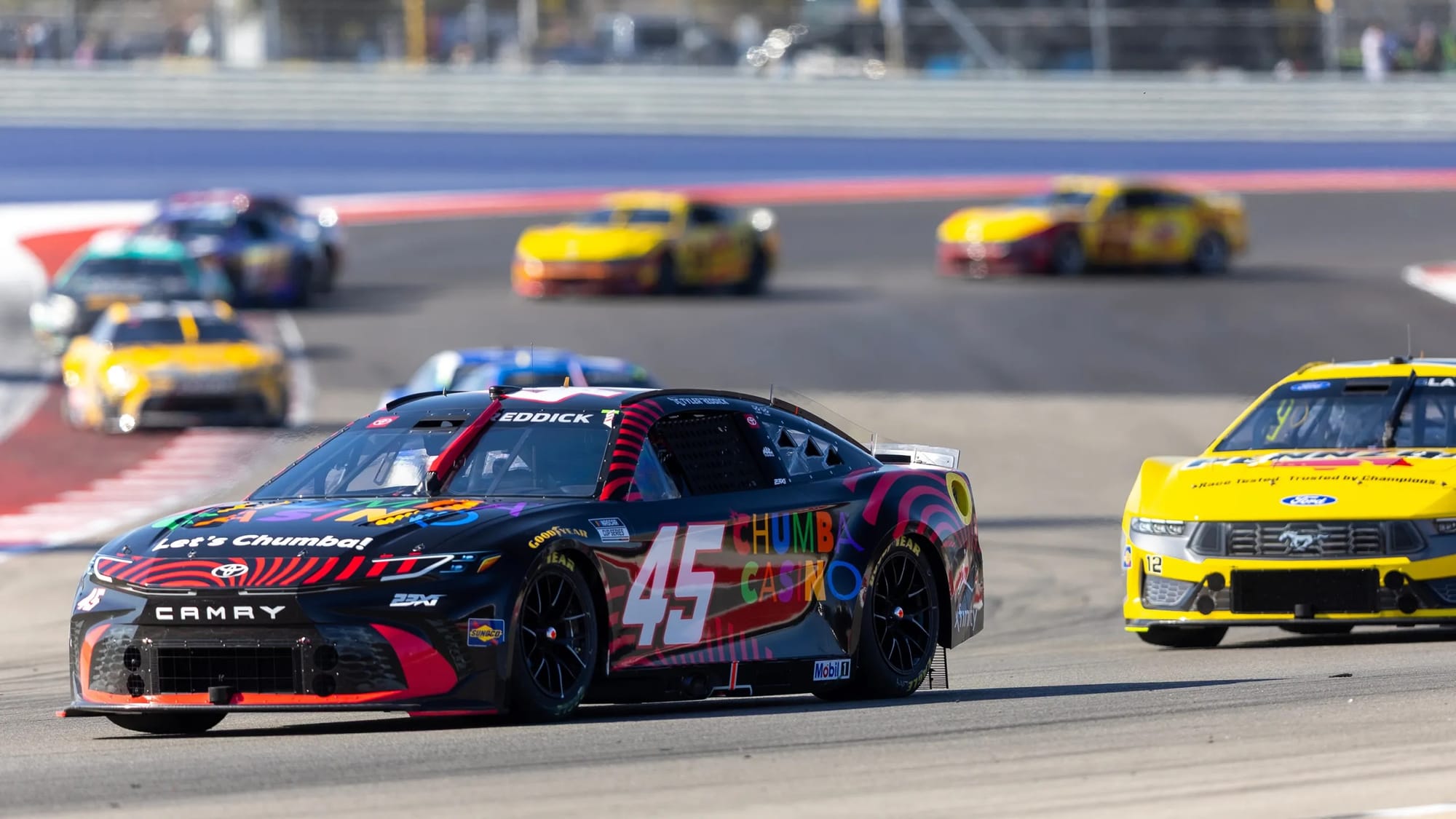
How Does Early Dominance Impact Fan Engagement Metrics?
Reddick's streak coincided with notable shifts in viewership and attendance figures, reflecting broader interest in NASCAR's 2026 season opener, interest that organizers can harness to upsell premium experiences.
The Daytona 500, Reddick's first win, drew significant audiences despite competition from other sports events, proving that star-driven narratives cut through the noise for better ad yields.
"The 2026 Daytona 500 averaged 7.489 million viewers on FOX, an 11% increase from 2025."
(FOX Sports, February 19, 2026)
This uptick suggests that high-stakes racing and star power, including Jordan's presence, boost tune-in rates, a straightforward play for marketers to replicate with celebrity tie-ins.
Peak moments during the race further illustrate engagement spikes, where those highs become prime slots for inserting brand messages that stick.
"Peak viewership for the 2026 Daytona 500 reached 9.154 million between 5:30-5:45 p.m. ET."
(FOX Sports, February 19, 2026)
Attendance data reinforces this trend, with on-site crowds contributing to economic impacts for host venues, impacts that venue bosses can amplify through data-led crowd flow tweaks.
"The 2026 Daytona 500 attracted 150,000 fans on race day and 450,000 across Speedweeks."
(Sports Business Journal, March 1, 2026)
Subsequent races showed mixed viewership: Atlanta averaged 4.487 million (down 2% year-over-year), while COTA drew 3.933 million (down 4.8%), dips that highlight the peril of assuming streaks alone sustain numbers without fresh storylines.
These figures, while variable, indicate sustained interest amid external factors like competing news events, urging broadcasters to diversify content to hedge against those drops.
Correlations from multiple sources link winning streaks to elevated digital interactions, such as X posts and streaming views, which can increase by 15-20% during dominant performances, a bump that's gold for digital ad revenue if captured right.
For stakeholders, these metrics translate to measurable ROI, with sponsors gaining from amplified impressions, though chasing short-term spikes might overlook building loyal bases that weather slumps.
Overall, the streak provides a case study in how individual excellence drives collective industry growth, growth that smart analysts forecast to fuel mergers if laggards don't catch up quick.
So What?
Stakeholders in motorsports, from team owners to sponsors and event organizers, can apply analytics similar to those underpinning Reddick's success to identify emerging trends, optimize race strategies, and enhance fan engagement—such as using viewership data to tailor marketing campaigns that capitalize on peak interest moments, thereby improving ROI through targeted sponsorship activations that turn those 11% viewership jumps into direct revenue lifts; event planners might leverage attendance figures to refine logistics and boost per-capita spending by 10-15% via data-informed amenities like VIP zones that encourage repeat visits; moreover, teams can employ telemetry insights to predict performance gaps, fostering competitive balance while driving overall market growth projected at 8% CAGR, ultimately positioning motorsports as a resilient sector for investment and innovation, though rushing tech adoption without vetting could inflate costs and erode those gains if integrations falter mid-season; this streak also spotlights how co-ownership models like 23XI's blend celebrity pull with data smarts to elevate valuations, a blueprint for attracting fresh capital, provided they navigate parity debates to avoid regulatory tweaks that cap dominance and squeeze margins. Subscribe to Vantage Motorsports Event Analytics for deeper dives into these metrics and actionable strategies.
#ProveYourVantage
Sources
- "Analysis: Reddick takes mantle as NASCAR's best, delivering historic three-peat to start 2026," NASCAR.com, March 1, 2026, https://www.nascar.com/news-media/2026/03/01/nascar-cup-series-2026-tyler-reddick-circuit-of-the-americas-analysis
- "Tyler Reddick's Daytona 500 win scores massive ratings for Fox," Field Level Media, February 19, 2026, https://fieldlevelmedia.com/nascar/tyler-reddicks-daytona-500-win-scores-massive-ratings-for-fox
- "Business is booming for NASCAR and Michael Jordan," Sports Business Journal, March 1, 2026, https://www.sportsbusinessjournal.com
- "NASCAR Achieves Increased Television Viewership For Daytona Events," Sports Illustrated, February 19, 2026, https://www.si.com/onsi/racing-america/news/nascar-achieves-increased-television-viewership-for-daytona-events
Vantage. Motorsports Event Analytics levels the track for high-potential U.S. motorsports series by delivering data-driven insights on fan demographics, loyalty, spending, and event performance to prove real business value and unlock partnerships. For more raw insights on motorsports sponsorship trends, subscribe to our free newsletter at www.vantagepointmea.com. Unlock the data that drives wins.